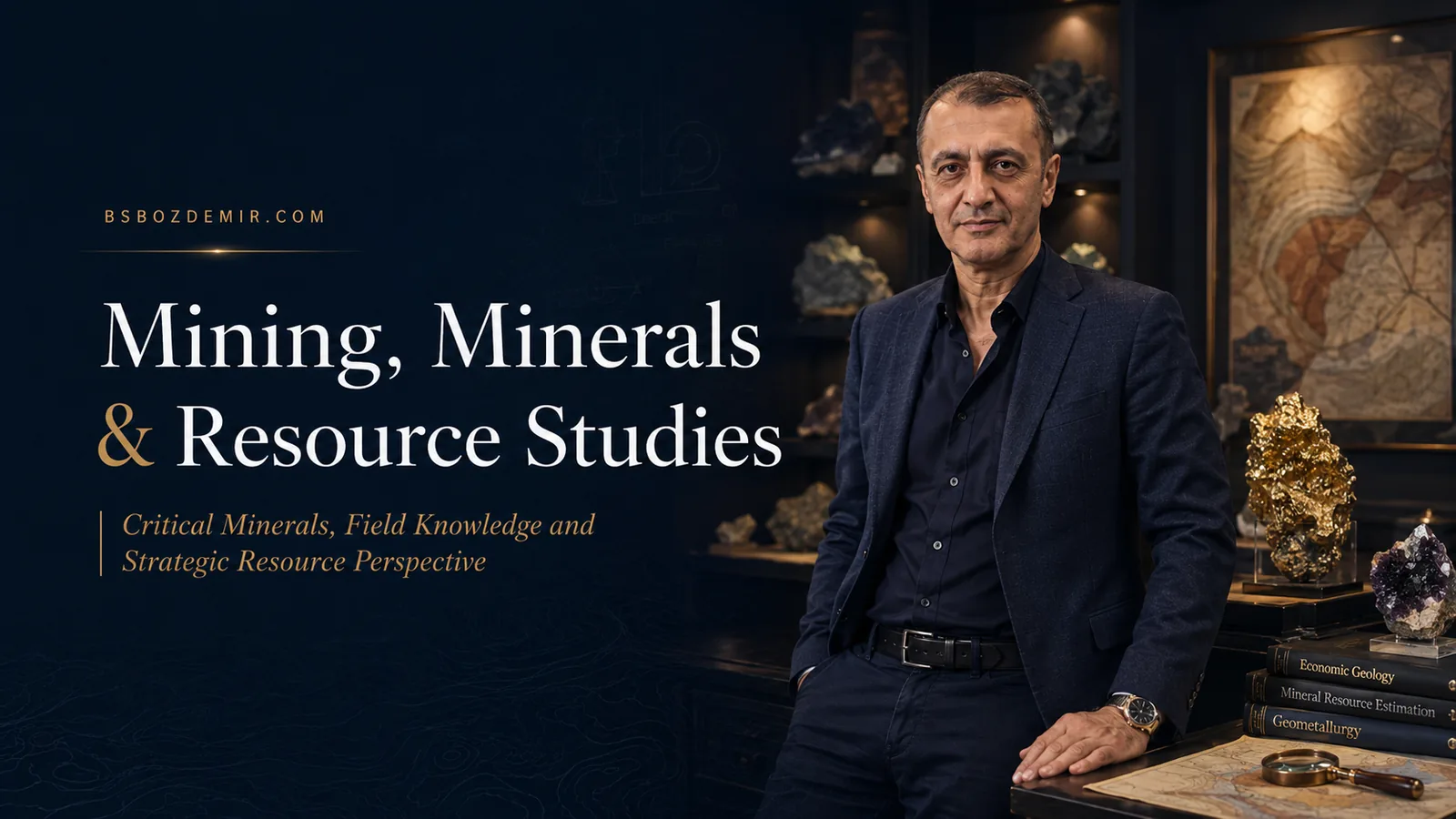
Mining, Minerals & Resource Studies
A focused resource-studies page for critical minerals, mining knowledge, geological context and the strategic interpretation of mineral resources.
Minerals as Technical and Cultural Evidence
Mineral specimens can be read at several levels: as geological materials, as records of mining history, as educational objects and as part of a cultural collection. This page links those perspectives with resource-security analysis.
Collection records and museum registration documents support the cultural and institutional side. They are not used as substitutes for technical exploration data or mineral-resource estimates.
Overview
Mining, minerals and resource-security pages connect an engineering and mineral-resource perspective with strategic questions surrounding critical minerals, geological knowledge, collections, field observation and institutional development. The section is designed to show continuity between technical interests in minerals and broader work on resource security, policy and international cooperation.
The approach combines technical literacy with strategic interpretation. Geological material, mineral specimens, resource concepts and mining-sector questions are presented in a form accessible to academic, institutional and policy audiences. Commercial, reserve, valuation or investment claims are not inferred from illustrative material; specific claims require their own technical evidence.
Areas in Focus
Documentation, Context and Status
This website uses a layered approach to public information. Descriptive pages explain the context; source-based archive pages are used for formal appointments, credentials, mandates and other claims that should be verified from documents. Historical roles, current work, proposals, independent projects and formal appointments are kept conceptually separate so that readers can distinguish context from evidence.
Where institutional recognition, accreditation, licensure, governmental authority, degree-awarding status or a regulated professional capacity is relevant, only the competent authority or the underlying source documentation can establish that status. The profile therefore avoids converting participation, study, cooperation or project activity into broader legal or regulatory claims.
Documentary Evidence on This Page
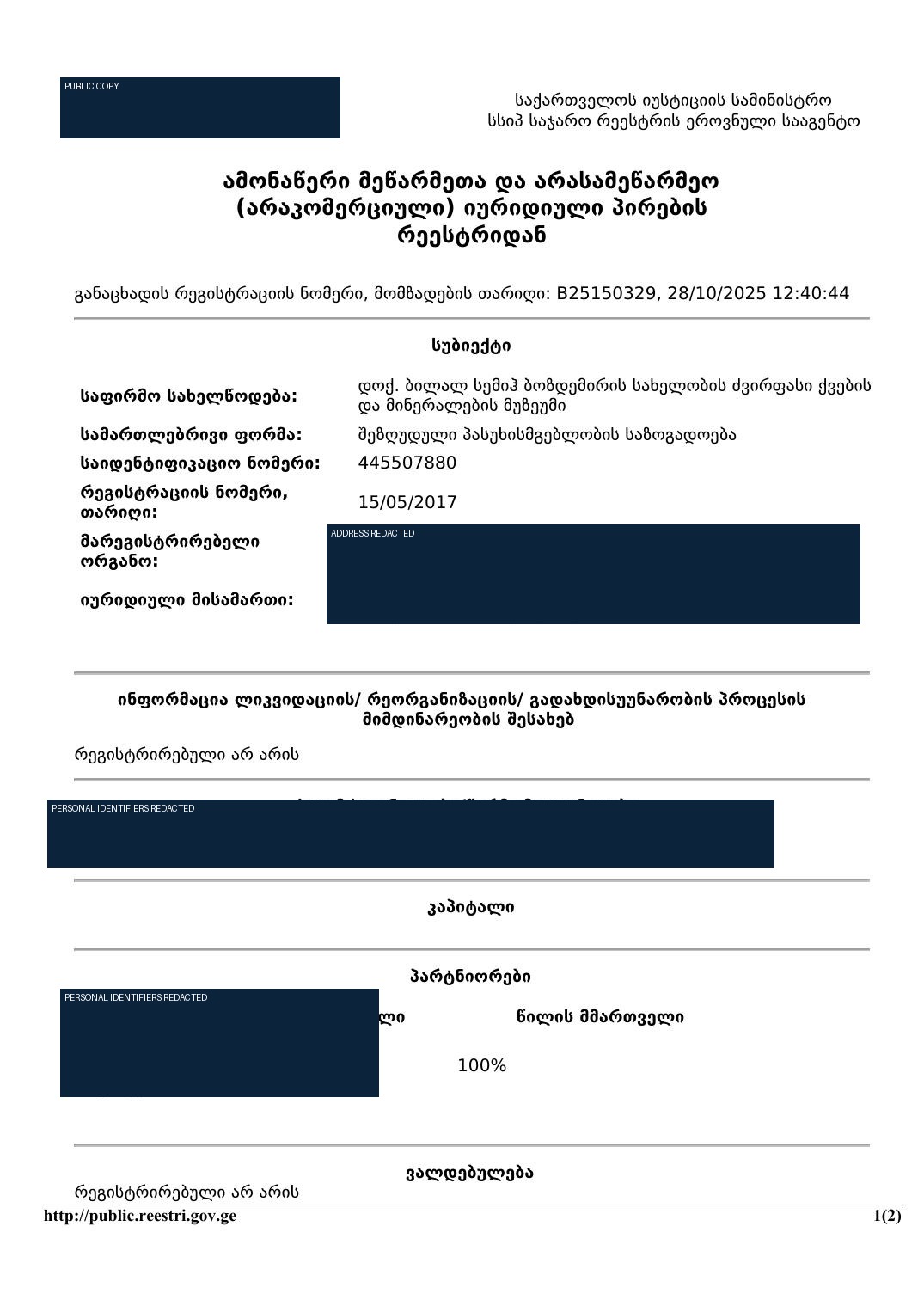
Minerals and Precious Stones Museum — Georgian Public Registry Extract
What this record supports
Public registry extract concerning the museum-named Georgian legal entity, including its registration identity and governance/ownership fields.
Document context
This is a newly prepared public-safe derivative from the private source archive. It is used on the Museum, Biography and Verification pages to document the legal-entity record connected with the Dr. Bilal Semih Bozdemir Minerals and Precious Stones Museum. The entity identification number and registration date remain visible because they are public registry facts; residential/address data, passport/personal identifiers and other unnecessary personal information are masked.
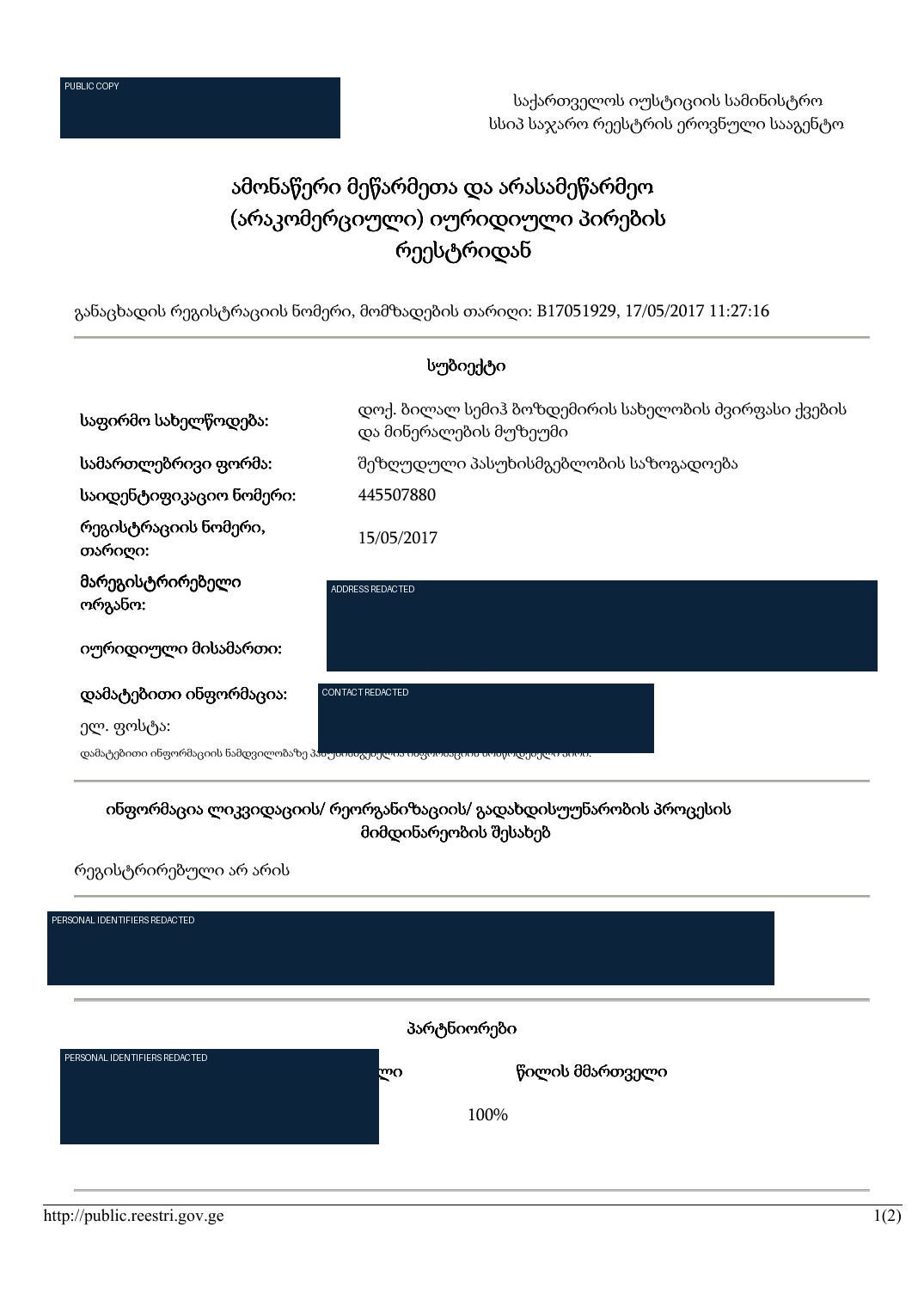
Minerals and Precious Stones Museum — Founding Registry Extract
What this record supports
Founding-period public registry extract for the museum-named Georgian legal entity, reflecting the 15 May 2017 registration date.
Document context
The 2017 extract provides historical continuity for the museum project by showing the legal-entity record near its founding period. It is displayed together with the later 2025 extract so the museum page contains both a historical and a more recent public registry reference. The public derivative masks the legal address, private contact information and personal identifiers while preserving the entity-level information needed for context.
Documentary Verification
The existing Public Verification Archive is preserved. Use it for source-based review of formal appointments, credentials, mandates and referenced records.
Recent Notes and Activities
Psychodermatology as an Interdisciplinary Research Framework
A structured note on mind-skin research, behavioral context and the importance of keeping scholarly interpretation distinct from patient-specific clinical claims.
Structured Observation in Dermatology-Related Inquiry
Why descriptive observation, research questions and literature review should remain distinct stages in dermatology-related academic work.
Critical Minerals and Resource Security: An Interdisciplinary Note
A concise framework connecting mineral knowledge, supply resilience, strategic planning and the need for evidence-based resource claims.
Related Pages
Mining
A technical and strategic section linking mining engineering, minerals, critical-resource questions, field knowledge and resource-security analysis.